Case Study
Over-the-counter payment processing
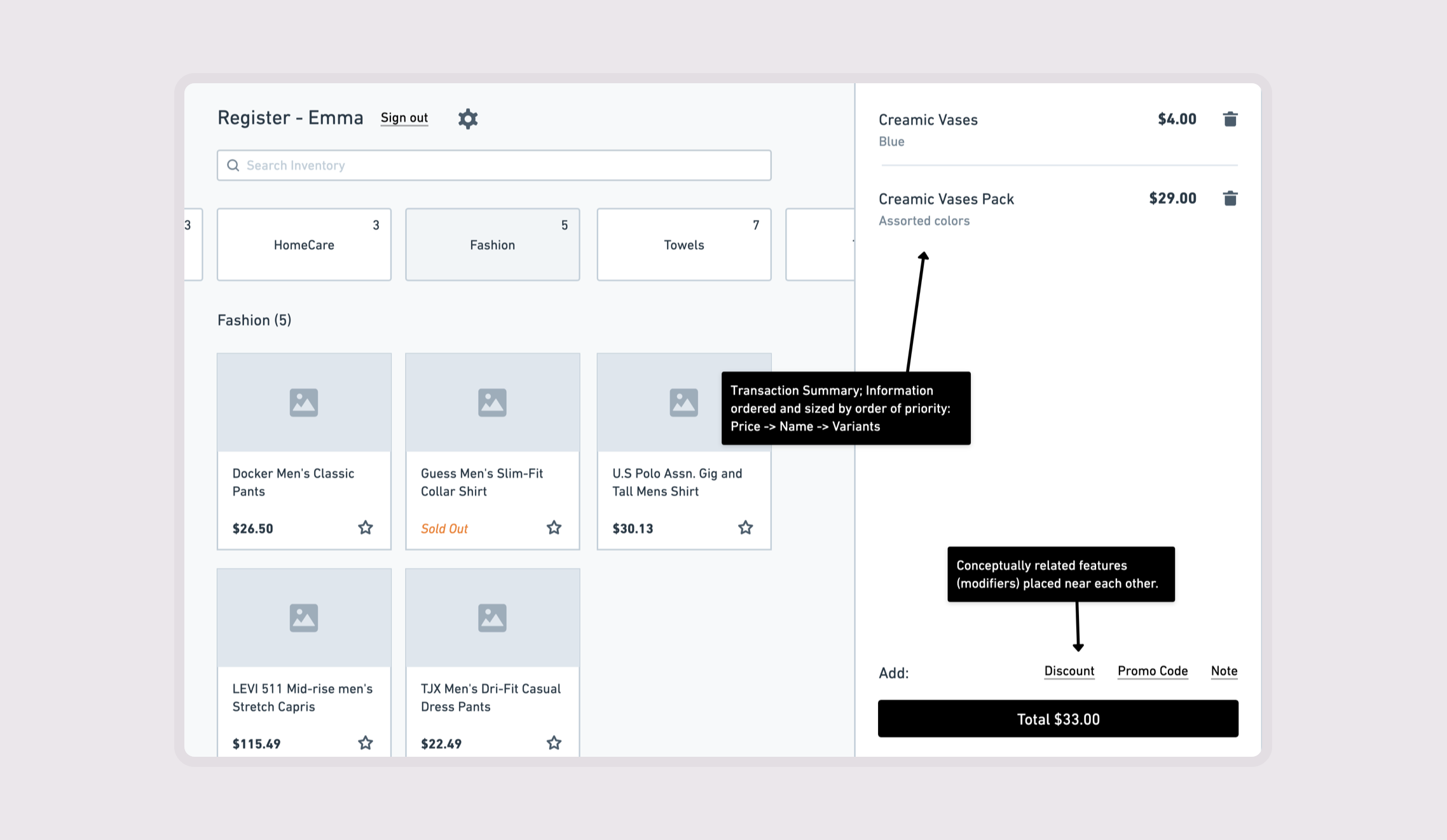
Designing an over-the-counter payment system aimed at enabling small to mid-size businesses accept in-person payments electronically.
Defining a point-of-sale product for a new market opportunity
Paymentus had built its business around digital bill payment. As the company explored opportunities beyond its existing market, Product identified in-person payment processing as a potential area for expansion.
I partnered with Product to define the requirements, interaction model, and user experience for a point-of-sale solution that would enable businesses to accept electronic payments over the counter. Rather than extending an existing product, we were defining a new product capability from first principles.
Defining the product before designing the interface
Unlike redesign projects, this work began without an existing product to improve. Together with Product, I helped define the workflows, concepts, and operational scenarios that would shape the experience before interface design began.
Our starting point was intentionally simple:
How should accepting an in-person payment actually work?
From there, we modeled the entire transaction lifecycle, identifying the tasks, decisions, and system behaviors required to support real-world payment scenarios.
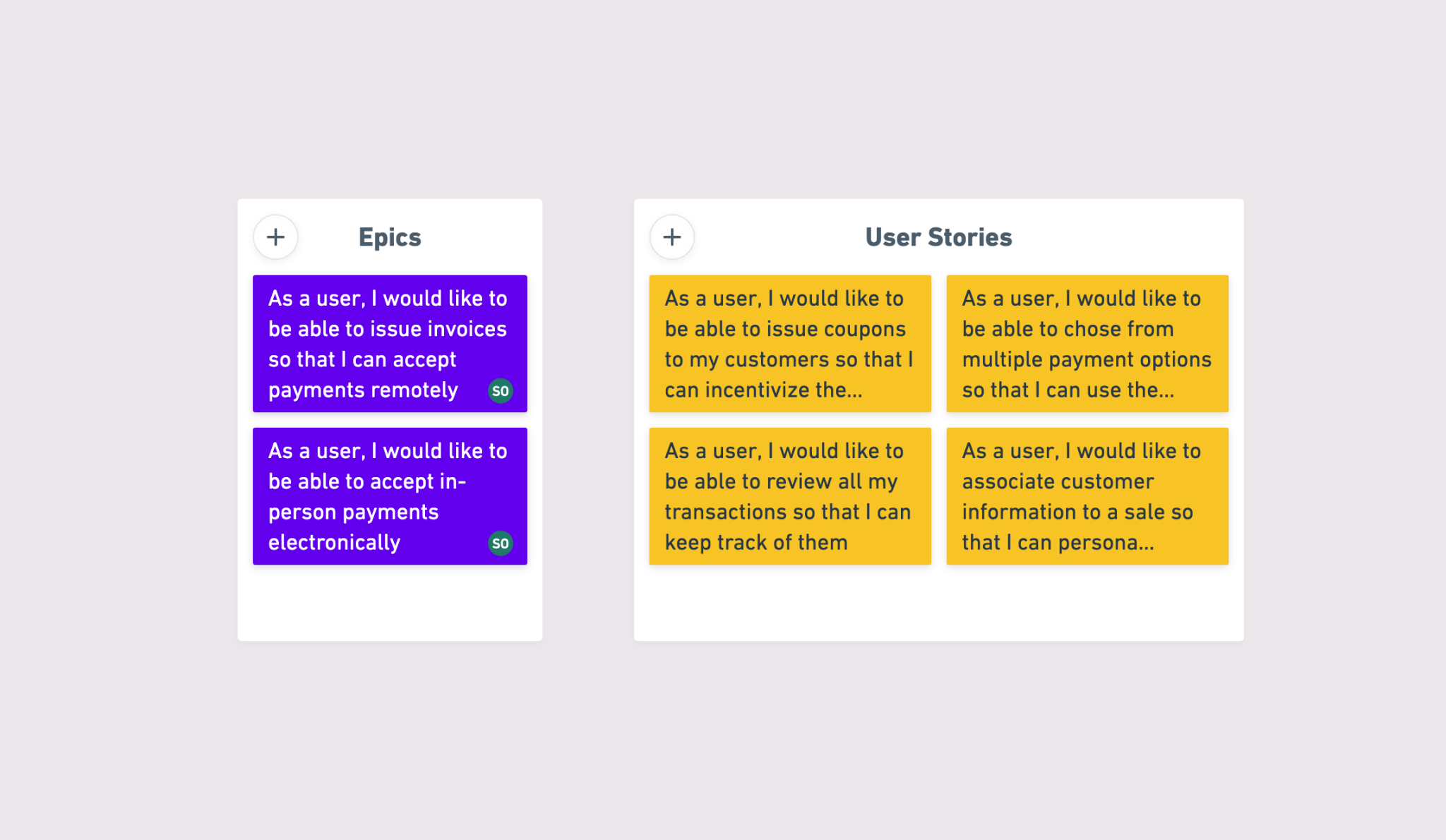
Modeling the payment journey before designing screens
Rather than beginning with interface layouts, I first mapped the end-to-end payment flow.
This exercise established a shared understanding of how cashiers, customers, and the payment system interacted throughout a transaction while exposing opportunities to simplify the experience before visual design began.
Every subsequent screen was derived from this operational model rather than being designed independently.
Letting the system do the work
One of the earliest product discussions centered around split payments. The initial proposal introduced a dedicated Split Payment feature that users would invoke whenever customers wanted to combine multiple payment methods.
I proposed a different interaction model.
Rather than asking users to explicitly choose a “split payment” workflow, the system could simply recognize when a payment didn’t satisfy the remaining balance and naturally continue accepting additional payment methods until the transaction was complete.
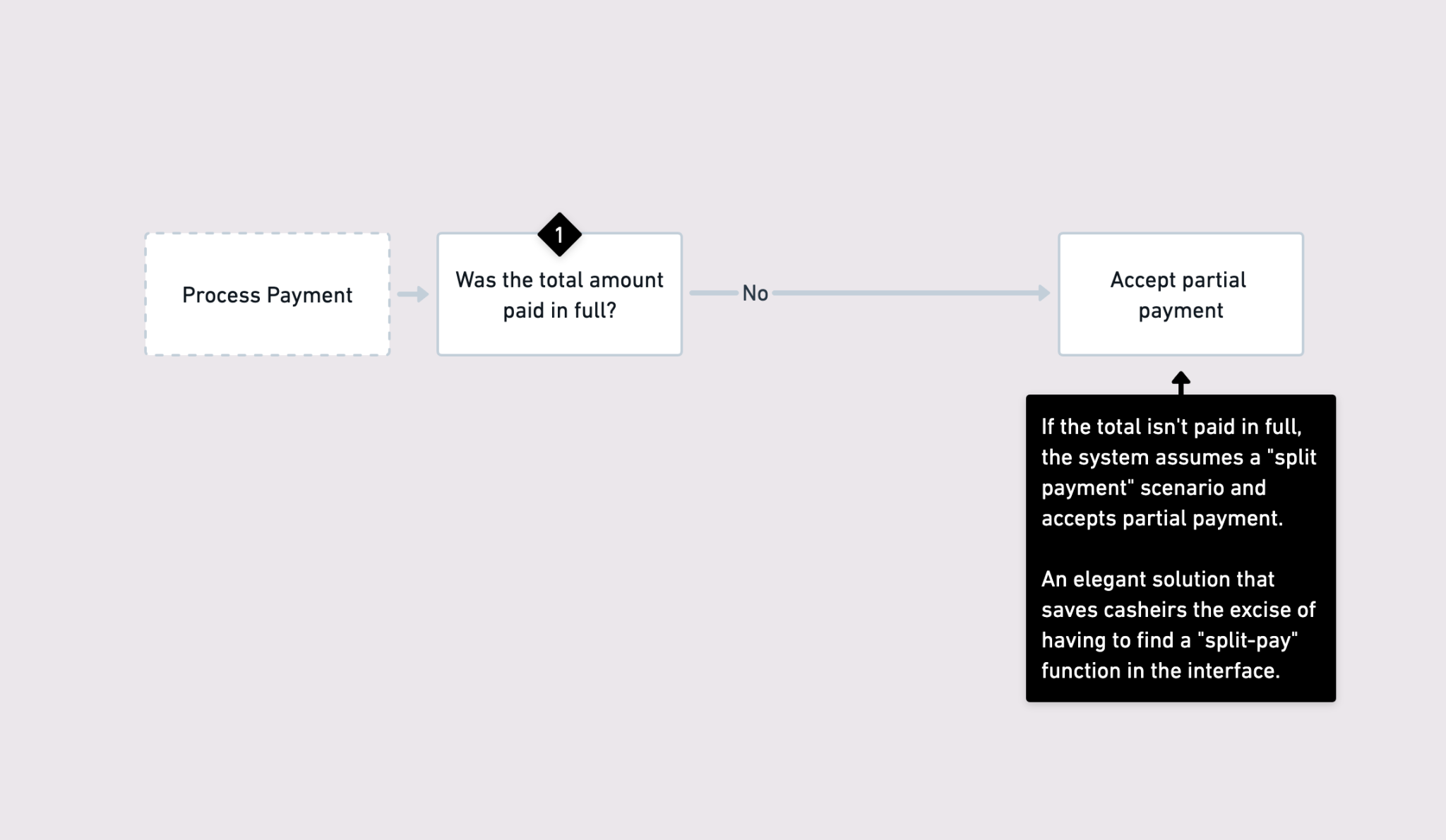
This shifted complexity away from the user and into the system. The interaction became simpler because users no longer needed to decide which payment flow they were in.
Designing around outcomes instead of screens
Instead of designing the interface from the first screen forward, I worked backwards from the transaction outcome.
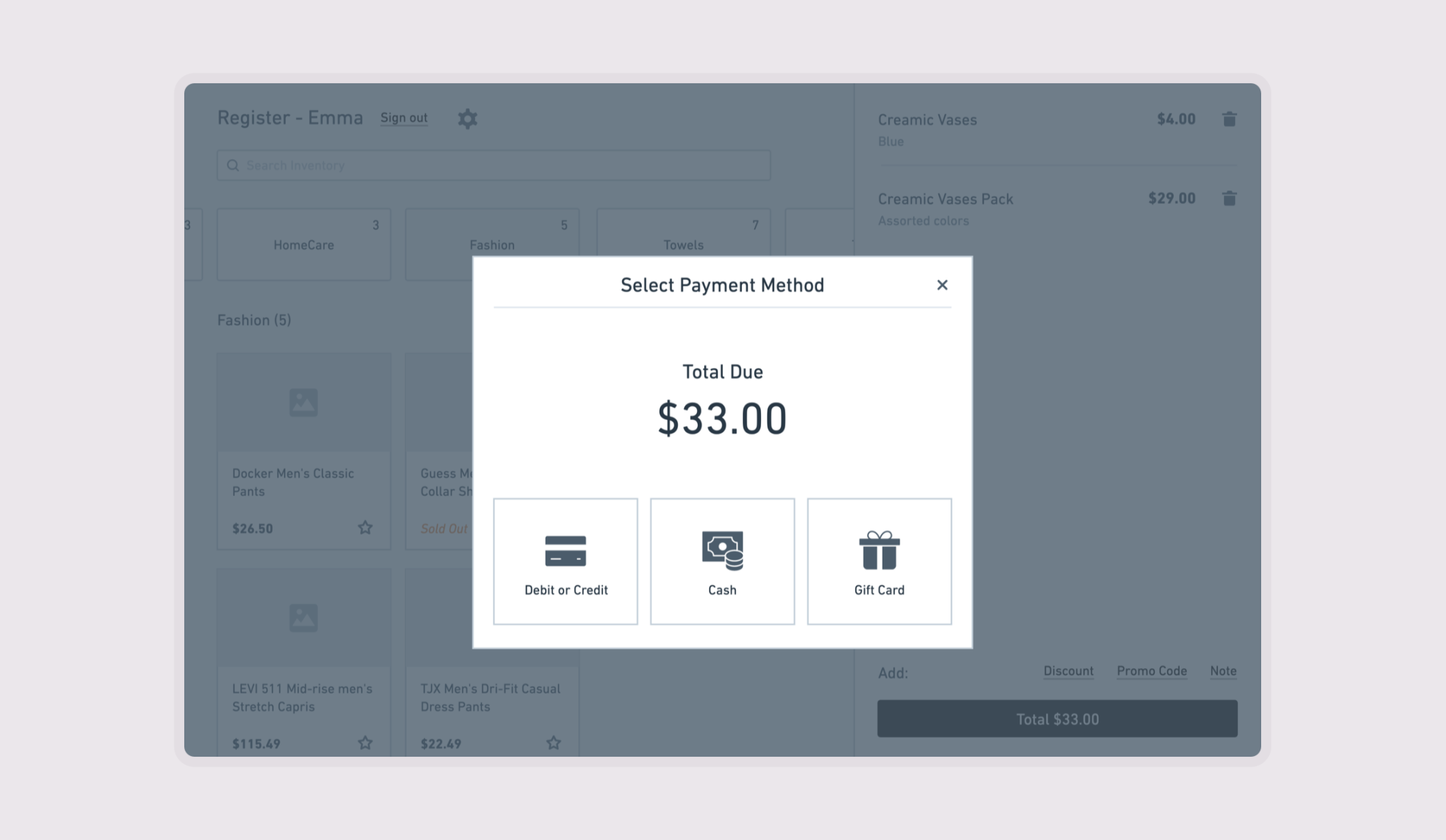
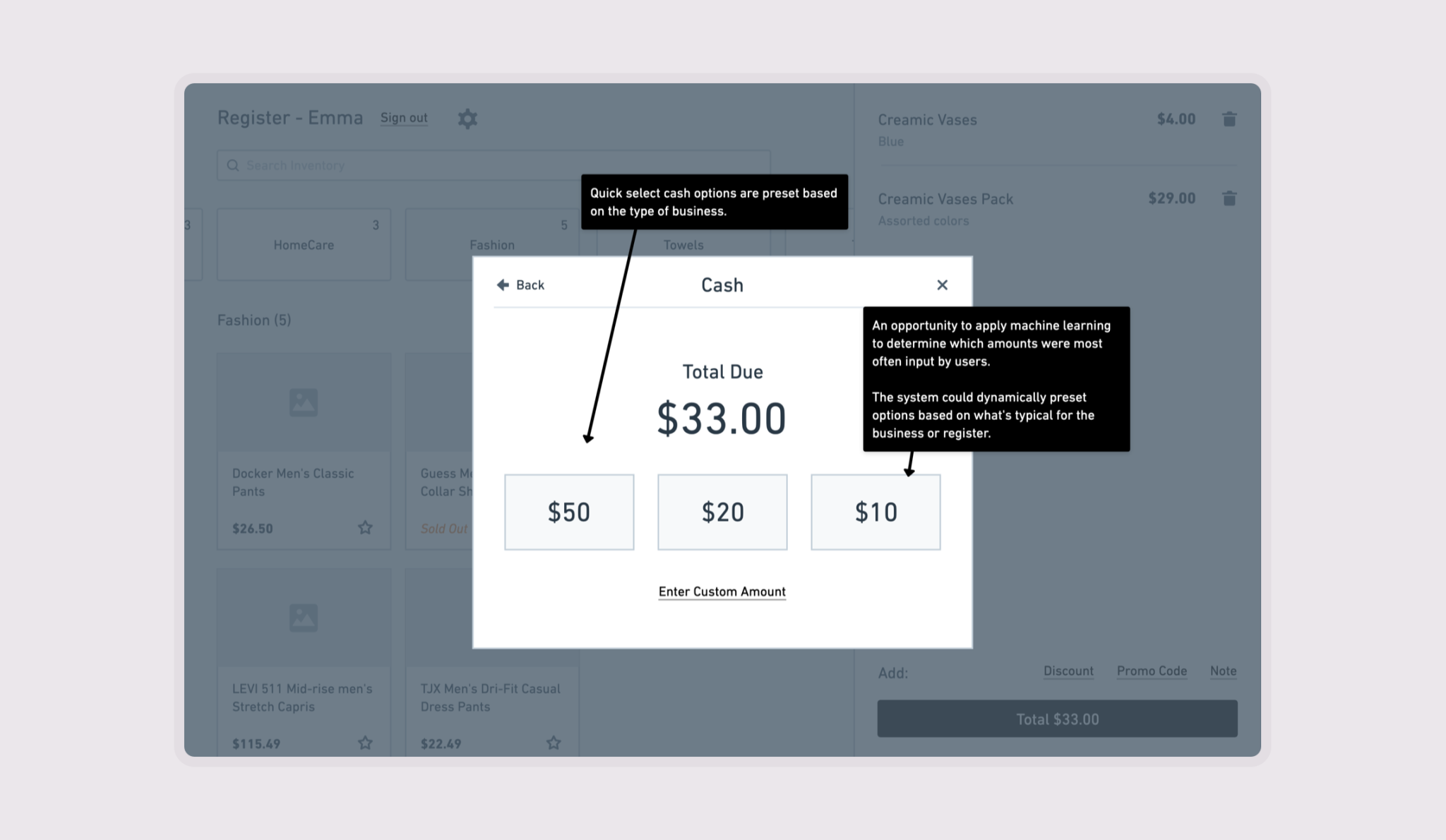
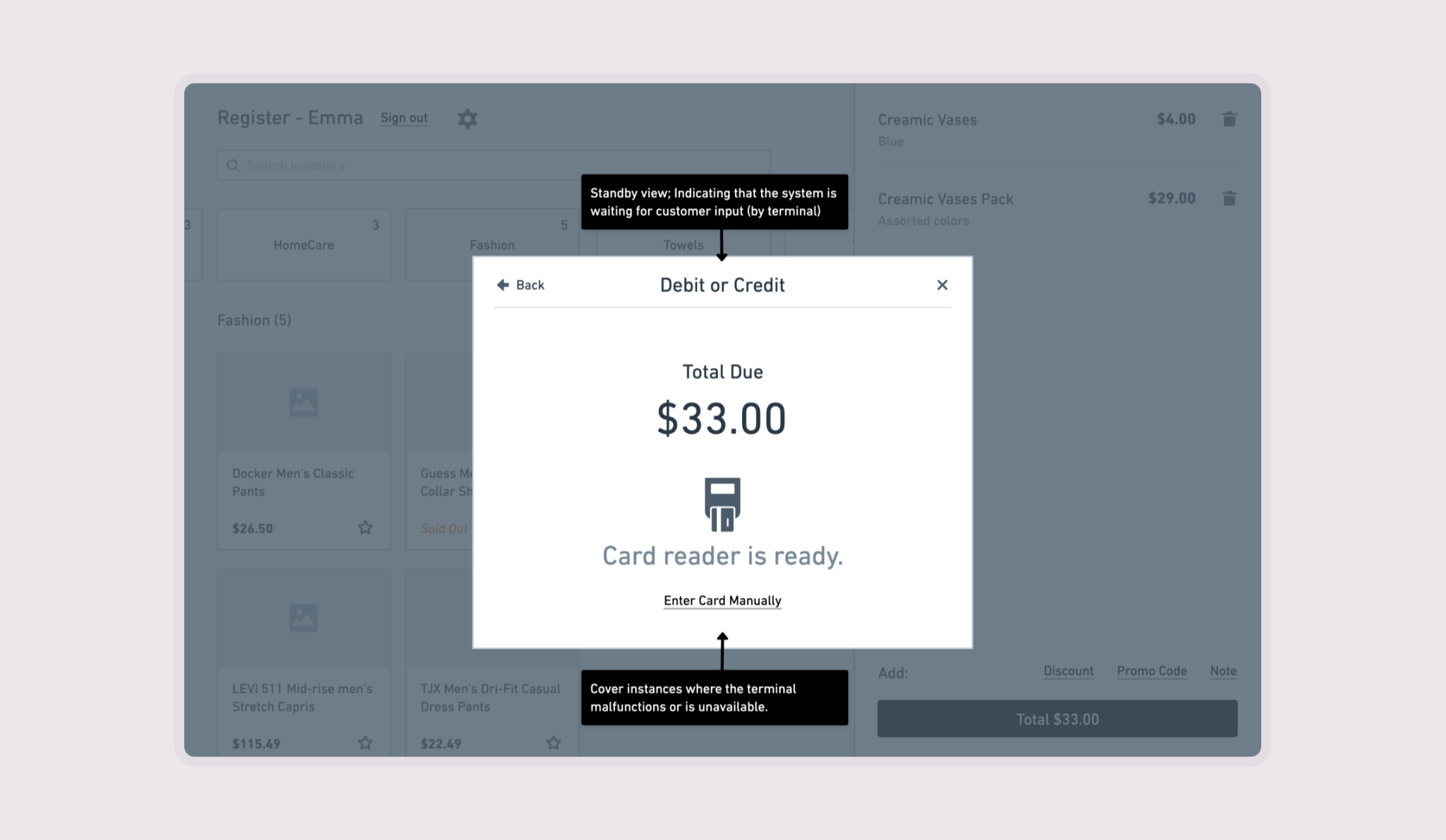
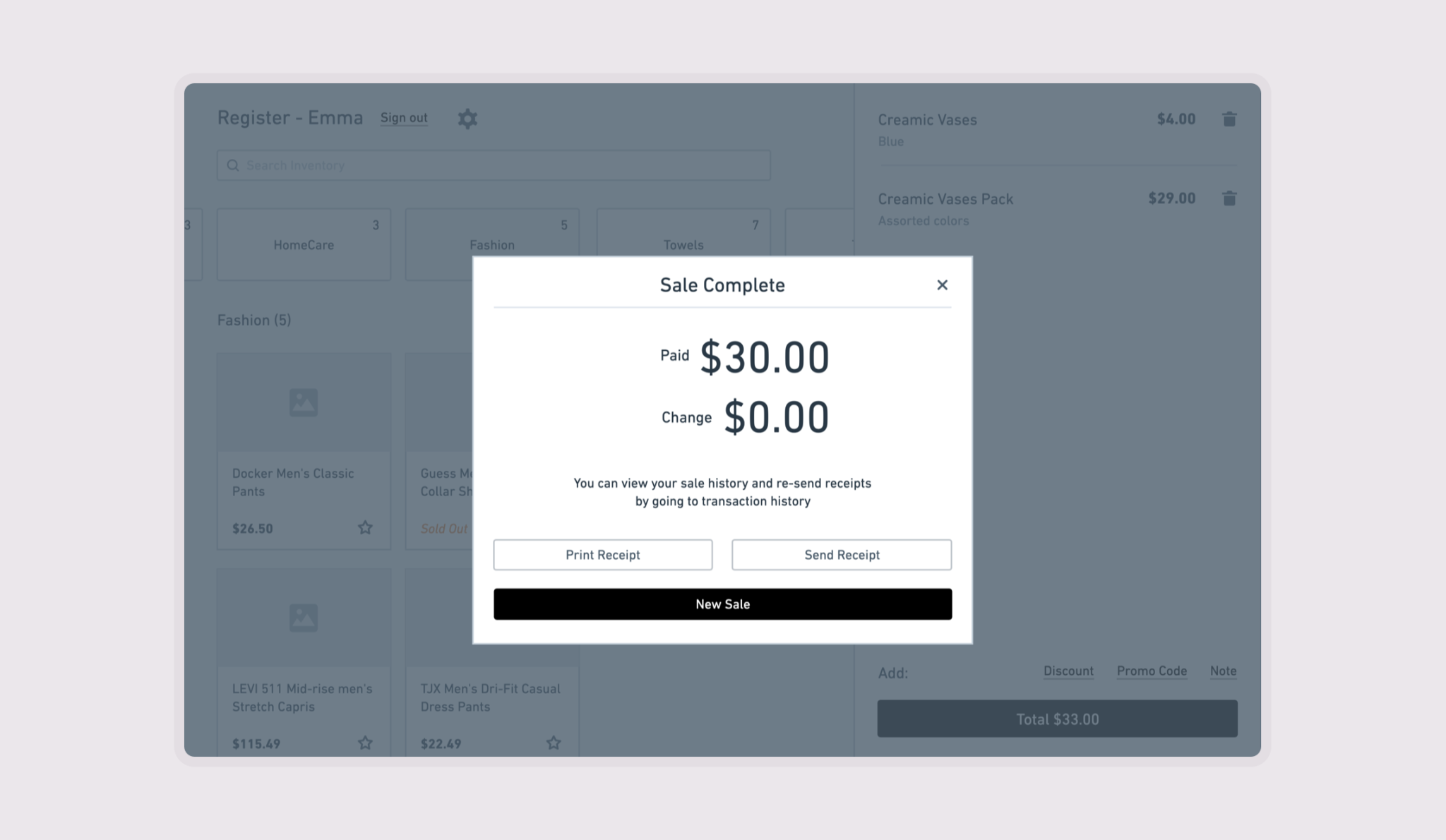
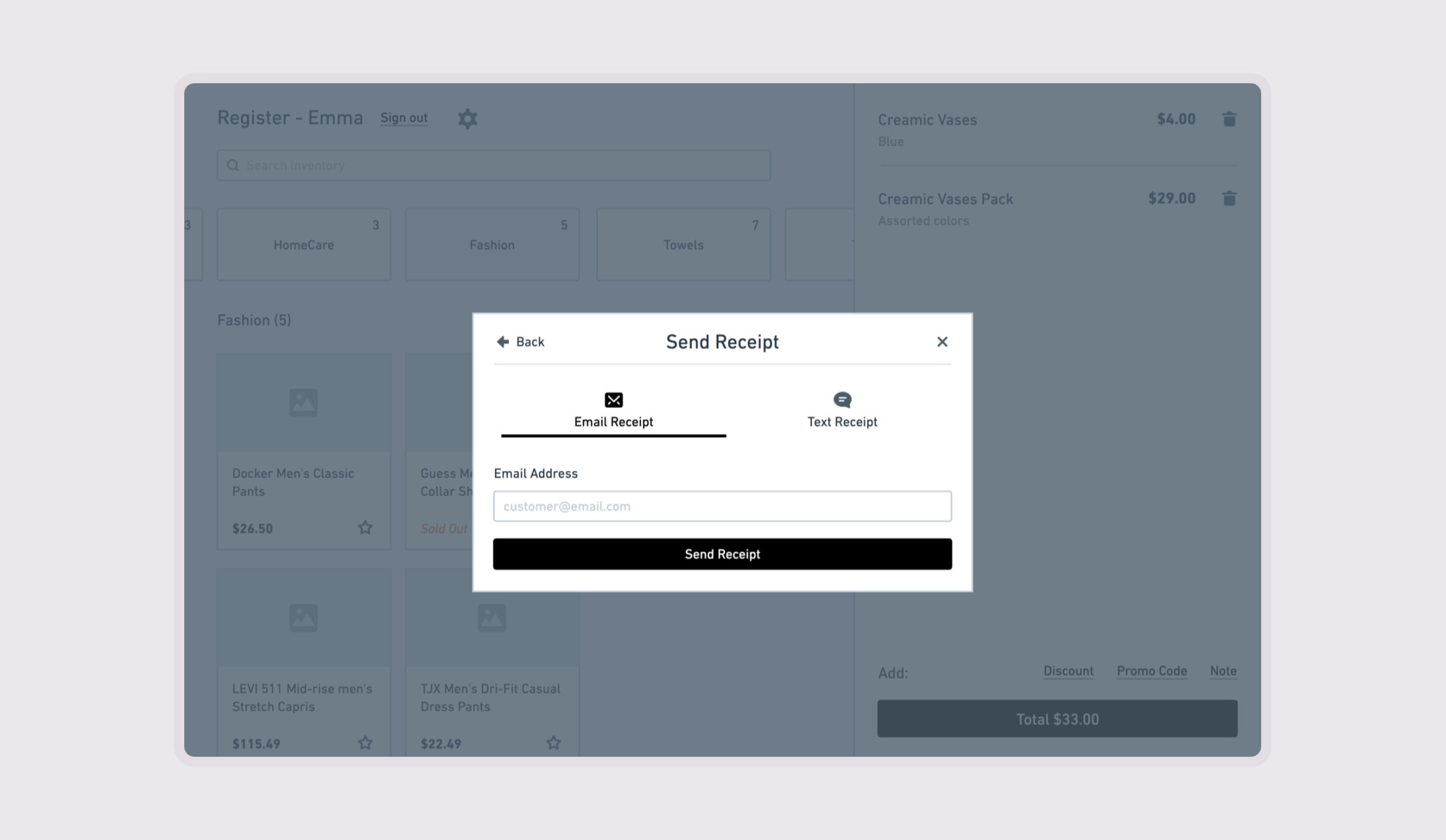
Beginning with the receipt and confirmation experience helped establish the information users ultimately needed to accomplish their task. From there, I designed each preceding interaction—payment review, payment method selection, and transaction initiation—to progressively support that outcome.
Working backwards ensured every screen existed to move users toward a clearly defined objective rather than simply continuing the workflow.
Separating products before separating interfaces
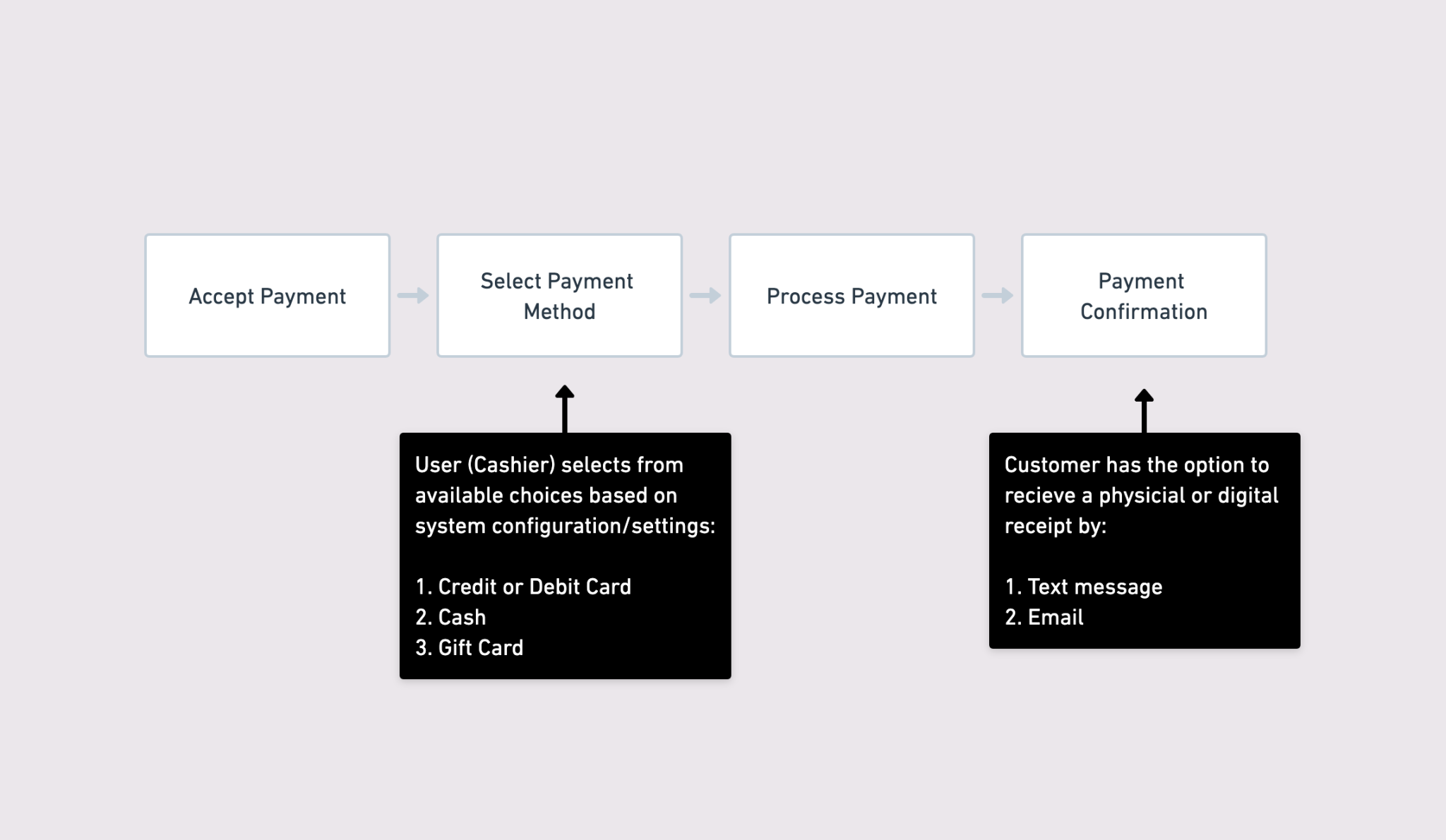
As requirements evolved, I noticed that the proposed product was attempting to satisfy two fundamentally different business models simultaneously.
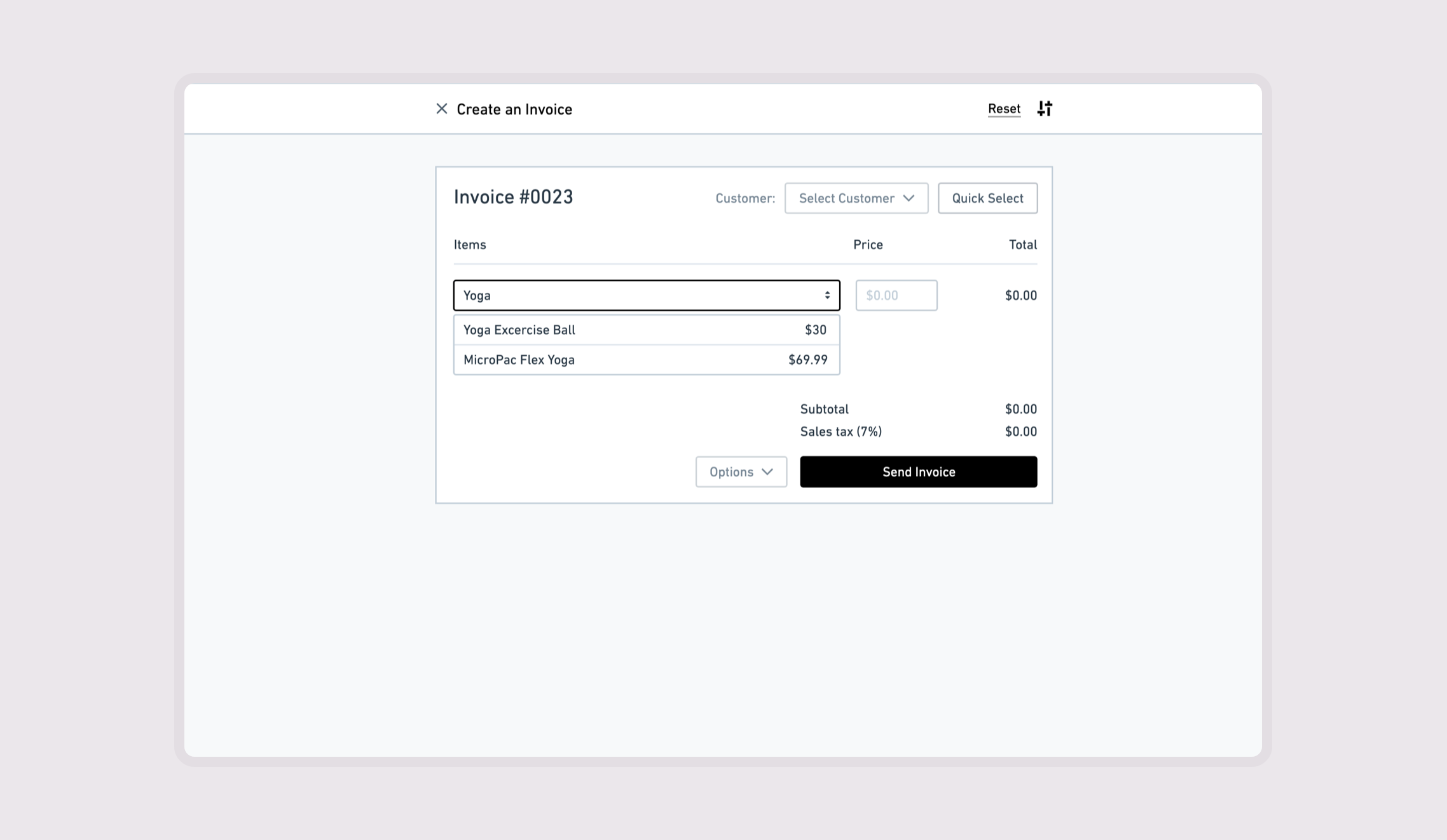
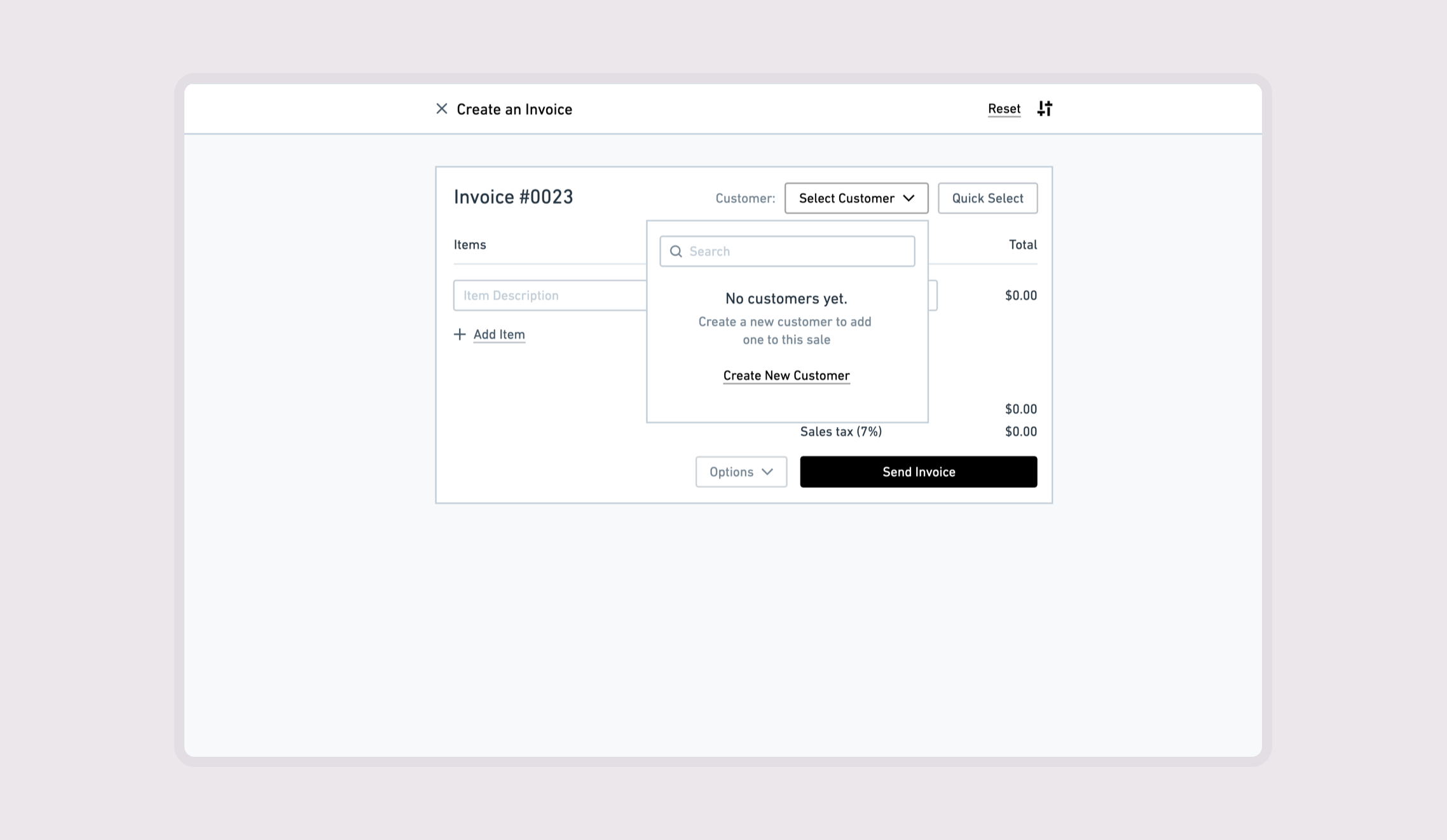
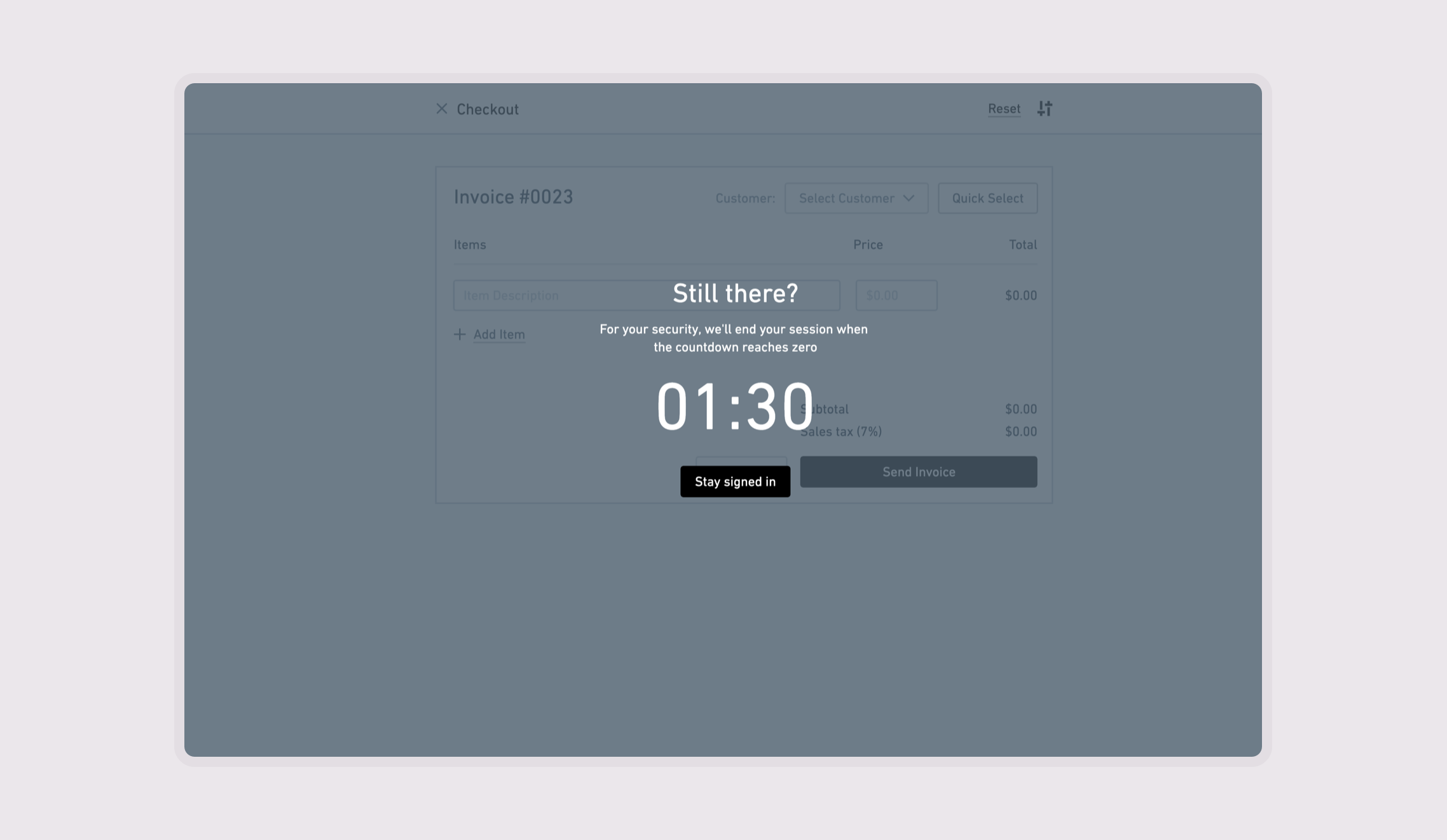
Some requirements reflected the needs of businesses accepting payments in person. Others were specific to organizations issuing invoices and collecting payment remotely.
Treating these as a single workflow introduced unnecessary complexity because each use case optimized for different user goals. Rather than continuing to expand one increasingly complicated product, I proposed separating the problem into two distinct experiences.
- One optimized for over-the-counter transactions.
- One optimized for invoicing.
This decision reduced product complexity while allowing each workflow to evolve around its own operational needs.


Delivering a product definition ready for implementation
As organizational priorities shifted, development of the product was postponed before implementation began. Although the experience was never built, the project successfully established the interaction model, product requirements, workflows, and supporting design deliverables necessary to support future development.
My contribution focused on defining how in-person payment processing should function as a product rather than simply designing how it should look.