Case Study
Organizing design work logically
Introducing an organizational system that reduced friction, improved discoverability, and changed how a design team collaborated.
Designing a shared information architecture for design collaboration
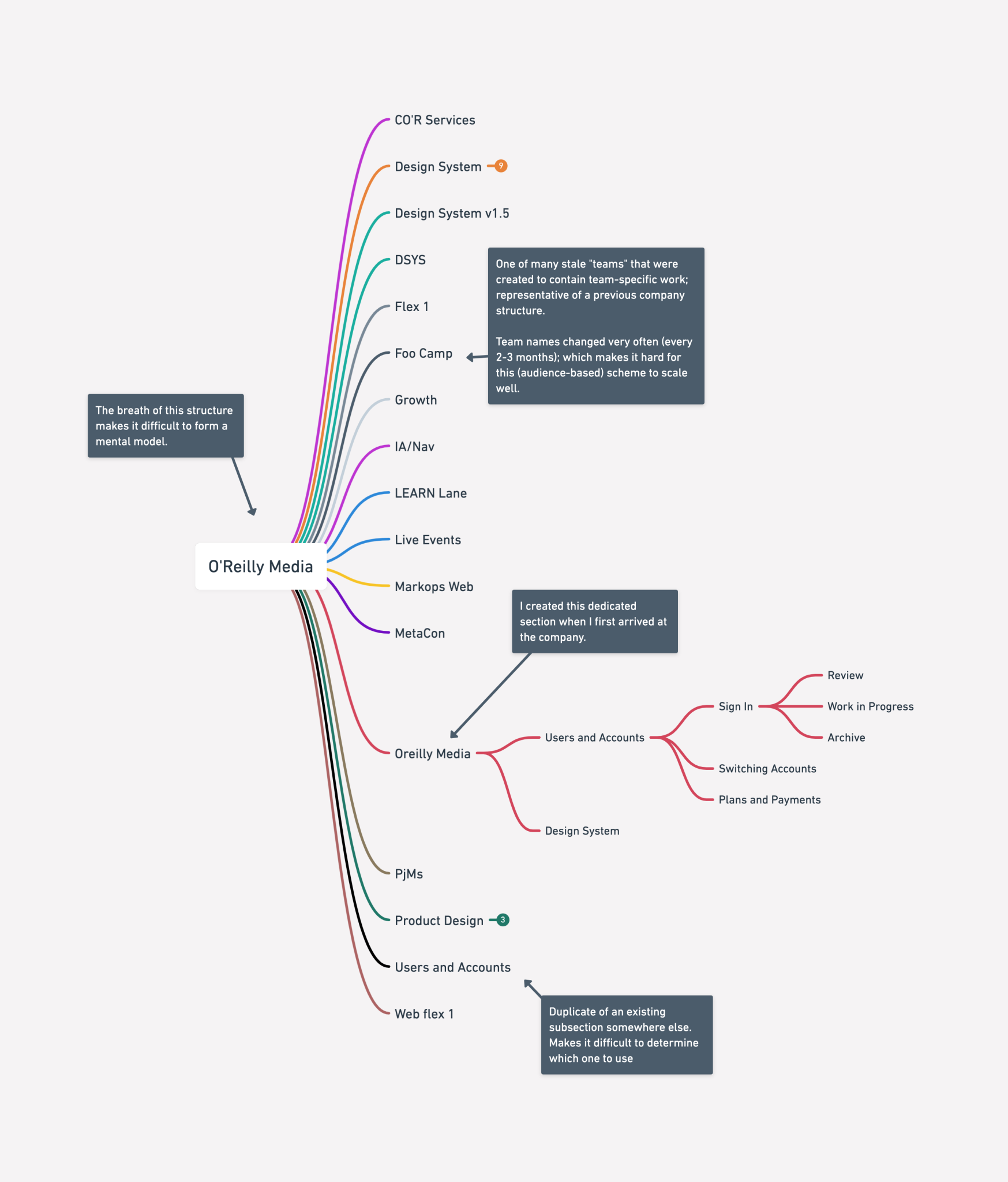
As O’Reilly’s design organization grew, its shared Figma workspace became increasingly difficult to navigate. Designers organized work according to their own preferences, making it challenging for teammates to locate files, understand project status, or determine where new work belonged.
Shortly after joining the team, I volunteered to redesign the information architecture of our shared workspace. Rather than simply reorganizing files, the objective was to establish a system that made work easier to find, easier to contribute to, and easier to understand across the entire design team.
Solving discoverability rather than organization
At first glance, the problem appeared to be one of inconsistent folder structures, however the real problem was deeper. Each designer had developed their own mental model for organizing work. While these individual systems made sense in isolation, they didn’t scale to a shared workspace used by multiple designers, product managers, engineers, and stakeholders.
The absence of a common organizational language increased the effort required to locate files, understand project ownership, and determine where new work should live. The objective wasn’t simply to organize files. It was to establish a shared mental model for the entire team.
Understanding how designers naturally organize work
Rather than imposing my own organizational preferences, I wanted the structure to reflect how the team already thought about its work.
I interviewed every designer on the team to understand:
- How they grouped projects
- How they named artifacts
- What types of files they created
- How they expected to navigate between related work
Rather than looking for identical workflows, I looked for recurring patterns that could support a shared organizational model without forcing designers to abandon the approaches they already found intuitive.
Designing around multiple mental models
The research revealed that designers organized work in different ways depending on context.
- Sometimes they thought in terms of products.
- Sometimes projects.
- Sometimes audiences.
- Sometimes tasks.
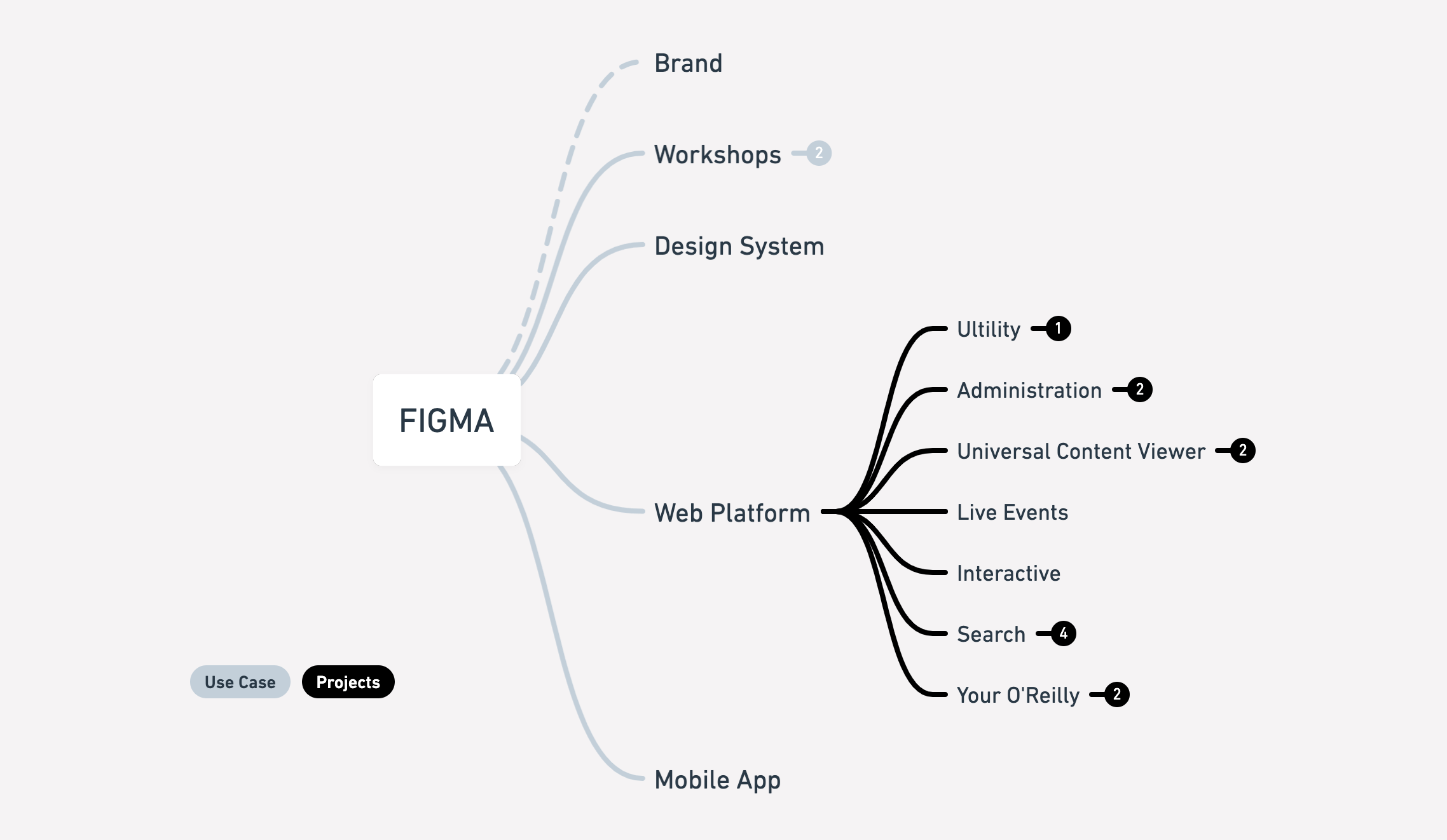
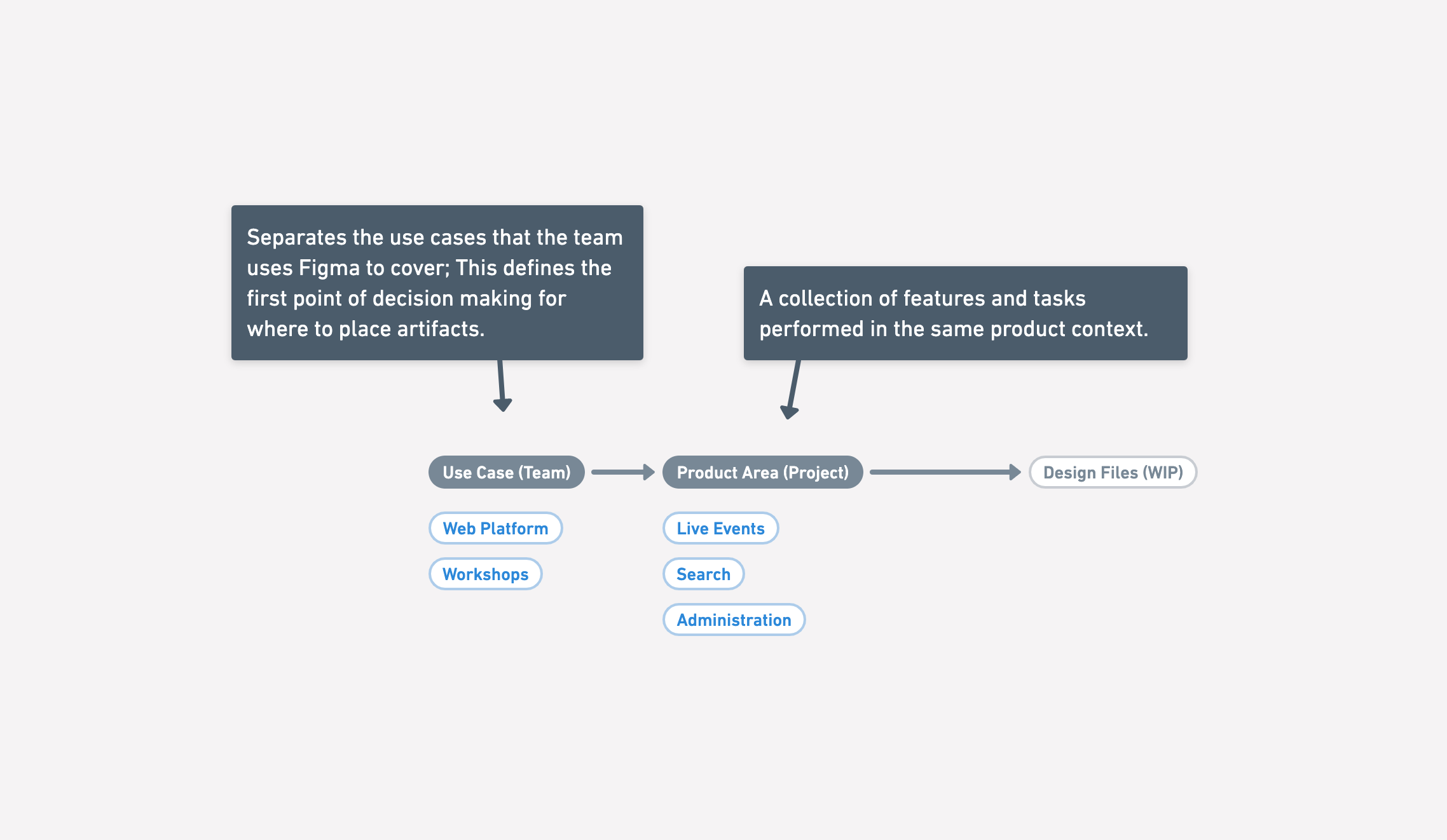
Rather than forcing a single organizational philosophy, I designed a hybrid information architecture that combined multiple organizational schemes while keeping the highest level of the hierarchy intentionally shallow.
Reducing the number of top-level decisions made navigation significantly easier while allowing deeper levels of the hierarchy to accommodate the team’s varying workflows.
Reducing cognitive effort through hierarchy
The final structure deliberately minimized breadth at the top of the hierarchy. Although hybrid organizational schemes can require users to briefly evaluate multiple categories before making a selection, reducing the number of top-level options made scanning significantly easier than navigating dozens of competing folders.
Rather than optimizing for theoretical purity, the hierarchy optimized for the way designers actually searched for information.
Balancing discoverability with ownership
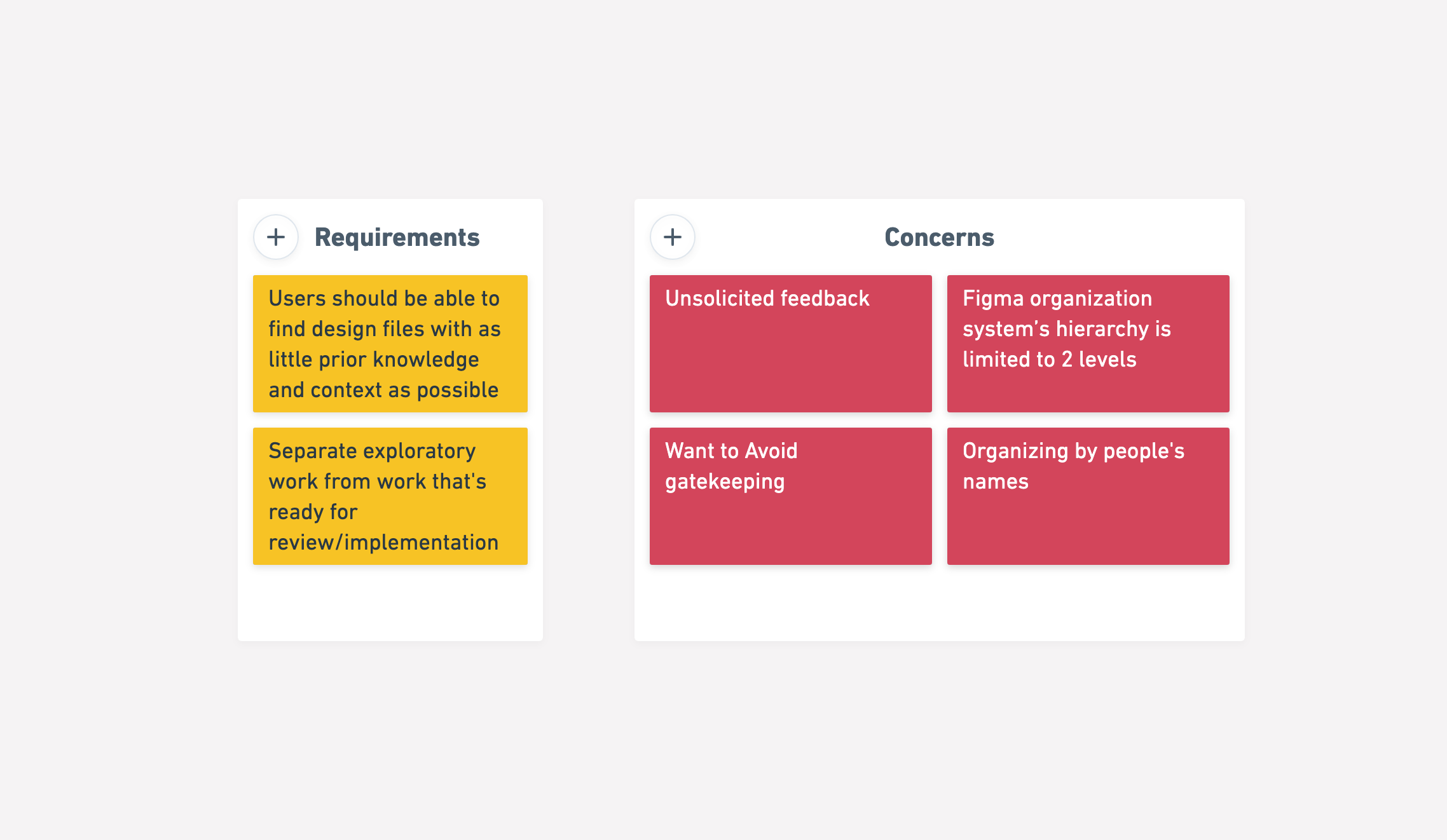
Improving discoverability naturally raised concerns about visibility. Several designers worried that increasing access to in-progress work might invite unnecessary feedback or create additional pressure during exploration.
Rather than enforcing visibility across the organization, I proposed a flexible governance model that preserved individual ownership. Designers could decide when to expose work more broadly while still benefiting from a consistent organizational framework.
This approach significantly reduced resistance to adoption because the system improved discoverability without removing individual control.
Introducing a system people actually wanted to use
I introduced the framework collaboratively, incorporating suggestions from the team as the structure evolved. The system was ultimately adopted by most of the design team and continued evolving through ongoing feedback after its introduction.
This work introduced clarity.
Finding work became more predictable.
Creating new work required fewer organizational decisions.
Project ownership became easier to understand.
Design artifacts became more discoverable across the organization, improving collaboration between designers and making the shared workspace significantly easier to navigate.